Saturday, April 11, 2009

Ranting Essay on The Chronicles of Narnia, Dei ex Machinis, and the Angst of Being an Anal Movie Watcher

WARNING: There are probably Chronicles of Narnia: Prince Caspian spoilers in here.

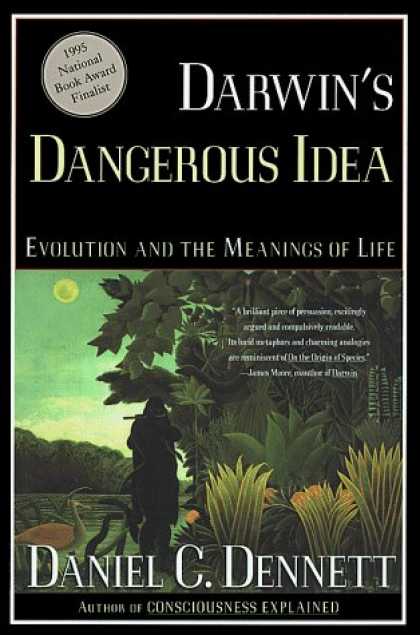
The other day I was watching the Chronicles of Narnia. The second one, Prince Caspian. Don't ask. (Also, pretty much unrelated to what follows here, but I hadn't seen the first film and, though I recall owning the C.S. Lewis books, I'm not convinced I ever read any of them as a child, either). Now, since long before I ever even knew there was a term for it, I've disliked the use of dei ex machinis. Lots of people do. This isn't unusual. Also not unusual is finding dei ex machinis in fantasy and sci-fi stories and movies, as magical or ultra-technological/futuristic elements go perfectly hand-in-hand with pushing-through-the-improbable and tying together loose plot ends that under normal circumstances could probably never be pulled close enough together to tie in the first place. Prince Caspian employs a deus ex machina twice towards the end of the film, and for some reason the way the particulars of the film coalesce just about screams all the ways a deus ex machina can be detrimental to the overall emotional/moral/cultural resonance of a film. I’ve always disliked “gods from the machine” because they are the sign of sloppy writing, ladders or (to use one of Daniel Dennett’s terms) sky-hooks that descend and rescue the writer from the corner they have painted themselves into. For many of us, they completely shatter the suspension of disbelief, and really, can be down right insulting after a significant emotional and temporal investment in a film or book. And, depending on the film, they can have much more devastating consequences to its intended message.

I think a big part of why Prince Caspian's dei ex machinis affected me so powerfully is that Prince Caspian is the first Disney film I can remember seeing that has a plot largely driven by people wanting to kill/trying to kill/succeeding in killing each other. I'm certainly no stranger to violence in movies, and Prince Caspian is hardly graphic, but honestly, as I watched these teens or tweens or whatever sort of adolescents they were actually kill people, I began to feel knotted with some kind of vague, ominous dread. They weren't killing monsters, they were helping monsters kill other people. This is heavy stuff to ride with, especially if the driver is going to bail at the end of the movie. A lot of the so-called monsters (who weren't all that monstrous really; all were archetypal staples of the fantasy congeries, most possessing significant elements of humanity) were stabbed and maimed and blasted and impaled by arrows in the service of the homicidal tween royalty. In fact, for most of the movie, the mixed-bag Narnians are getting their asses utterly spanked, suffering major losses against the all-human Telmarines. Much blood (I'm assuming) was shed and many lives were lost in the struggle to reclaim from the Telmarines the land that rightfully belonged to the Narnians. After the first major battle, the Narnians fail to seize the Telmarines' castle and must retreat. In the second major battle, they again find themselves getting badly beaten, about to lose control of their own stronghold. But then: WAZZA! Deus ex machina! Suddenly Mr. Talking Lion (who is apparently one or two tricks shy of omnipotence) decides he is going to help after all, first making trees flail around and attack people, and then summoning a gigantic Water Jesus to make everyone really, really wet before scaring the remaining Telmarines into surrender by somehow eating a guy on a horse (hold all comments about the Christian allegory found in the stories).

Nietzsche disliked the deus ex machina because it creates a false sense of consolation by attempting to resolve "tragic dissonance" in a manner that isn't metaphysically sound. Without a logical chain of causality, strife means nothing. Neither does reward if it materializes from the ether, largely independent of the actions being rewarded. This is where Prince Caspian blunders so epically. If at any point in time a Talking Lion can step in and thaumaturgically correct the most dissonant of situations, then anyone who suffered or died in an effort to change that situation before the intervention did so for nothing. It means nothing to die for a cause that is ultimately addressed through means outside of possibility and plausibility. Yes, the Narnian’s cause is a noble one in Prince Caspian, but only up to the point where events stop adhering to the logic the story has been developed by. After that, fatal cracks are sent backwards through everything leading up to that point, as though a heavy foot testing the integrity of a delicate sheet of ice finally shifts too much of its weight forward. After spending the better part of two hours gradually increasing the tragic complexity of a tale, claiming there's resolution when a marvelous panacea swoops in from God-knows-where is fraudulent. If at any point the miraculous can affect any outcome, then the events witnessed in the film ultimately mean nothing, because a deterministic chain can never be established, nor can the efficacy of agency be presumed for any character. Arguably, no one or nothing can affect the result of a series of events, because there is the possibility that any logical, Natural-Law-abiding steps taken towards an end can be immediately and utterly prevented or reversed by someone or some thing that doesn't even acknowledge logic or laws! What's the point of dying in a siege on a Telmarine castle if Aslan could've sent Water Jesus through to blast all of the Telmarines out? Or really, how did the Telmarines ever drive the Narnians to the brink of extinction in the first place if Aslan can do whatever he wants? Once illogical flights of fancy are made manifest, the whole back story is fair game for hypothetical applications of magic or divine intervention or implausible coincidence. Fighting and dying and hurting doesn't mean a damn thing if the resolution makes it clear that those things really didn't have to happen. It's meaningless if a Narnian dies at the hands of a Telmarine if the Telmarines can be completely eradicated by Aslan whenever he so chooses, and it means nothing for a Telmarine to die for his cause if it's not even a possibility that the Narnians can be defeated.

This kind of stuff nearly gives me an anxiety attack. Not because I have any resounding interest in the well-being of fictional characters, but because this sort of thing is touted as acceptable. And maybe worse, most people don't even care. David Foster Wallace touched on this when discussing the films of David Lynch: people like to be reassured of certain moral truths and the idea of justice, and movie-watchers do not like to be made to feel uncomfortable "unless the discomfort serves a conclusion that flatters the same comfortable moral certainties [they] came into the theater with" (p. 203) Movies like Prince Caspian have to resort to tossing in a deus ex machina because they ratchet up the tragic dissonance to such an unstable amplitude that the audience's expectation of righteous moral resolution can't possibly be met without resorting to a "god from the machine." If things played out the way the logical reality within these films dictated, evil and suffering would probably prevail. And even movie-goers who dislike trite or formulaic story lines tend to get upset when the bad guys come out on top. I'm not suggesting Prince Caspian should have let the bad guys win because that's what soundness of plot requires. Ideally, Prince Caspian should never have been written so that the good guys had no chance of ever winning without miraculous intervention.

I'm not sure how many other people have filmic crises like this after getting slapped with a fat deus ex machina, but it seems as though most are willing to accept a gnarly plot device so long as it guarantees the “earthly consonance” (to again borrow from Nietzsche) they are expecting. For me, it's brain-scrabbling when I'm forced to ponder whether the displays of justice and moral closure I'm being fed really should give me those warm fuzzy feelings, because just under the surface, I know they're the products of fraud. If I can't suspend my disbelief, if I can't accept that what is presented as goodness and justness is legitimate, then in a way, evil really does win out. I’m then confronted with all sorts of onerous psychic pinpricks, as the deus ex machina just becomes a sober reminder of the pervasiveness of shit and injustice and suffering, because the idealistic fantasy was just a tad too fantastic to slide through as a substitute. And I’m watching a Disney movie, here. I'll stick with Lynch if I want to be accosted by the dark, terrible ambiguity of human morality and existence. With Prince Caspian and the like, I get double slapped: (1) by the insult of having to accept a deus ex machina as a legit resolution and (2) by being denied the reassurance of the hopeful moral order of things by that very unbelievable deus ex machina. Which in a foolishly ironic way, is pretty damn unjust. This is why I particularly loathe the genres of fantasy and science fiction. To me, they always seem to have the opposite effect of what they intend by flushing the nobility of their tales down the toilet of the tenable and into some nether void of wacko irrationality. Suspension of disbelief is the audience's gift to a film maker. Prince Caspian-scale dei ex machinis are like stomping on the gift before the giver's eyes, or worse, wiping your ass with it.

This may all be a bit hyperbolic, yes. I recognize the issue is fairly minor. But as far as it relates to the importance of writing and the integrity of story-telling, etc, etc, I wish I was over-reacting. And believe me, in this Age of Irony, I’m aware that the use of dei ex machinis is fraught with ambiguity. But there’s a big difference between the endings of Dodgeball and Prince Caspian. Unfortunately, there’s still a lot of bad writing going on out there in the world. There has been since the first dei ex machinis used in Greek tragedies. But hey, at least I’m not ending this particular example of it with any deities being lowered down via mechane. That would probably undermine my whole argument. Besides, special effects were never the issue here. As far as those are concerned, Prince Caspian’s the bomb.


-Nietzsche, Friedrich. (1872). The Birth of Tragedy. Modern Library: New York.

-Wallace, David Foster. (1995). "David Lynch Keeps His Head." A Supposedly Fun Thing I'll Never Do Again. Back Bay Books: New York. pp. 146-212.

Thursday, April 9, 2009

I Really Have Hard Time With This Blog...

...which is why I started another blog! If I can't keep up with one, not keeping up with two shouldn't prove much more difficult. But really, this new jobby is something I've been mulling over for quite a while now, and it seems appropriate based on the sorts of things I've been most interested in writing about lately. Plus, it seems like a good way to better digest the absolutely obscene amount of music I've exposed myself to over the years (and continue to expose myself to). So go check 'er out:

Breath and Substance:
Thoughts on Creative Music


Monday, February 9, 2009

You Lost Me After 3-D...

"I'm dealing with the dark things of the cosmos."
-Sun Ra


I thought I had a pretty decent handle on the four dimensions that we experience every day, but I had no idea things got as out-of-hand as this. The following video is only presented from a "this is pretty interesting to think about" perspective, not as an explanation of accepted scientific fact or an introduction to advanced physics (a field in which I'm waaaaay out of my league). It's the sort of thing that would make an actualist want to go on a homicidal rampage, and I for one don't really buy any of the string theory comments made at the end of the video. (I'm also wary of the suggested ease-of-travel their "folding" analogy implies.)

Imagining the various dimensions is great fun within the context of thought experiments, but I have a hard time finding or accepting any evidence that any of the upper dimensions discussed in this video exist in any form outside of human thought. The possible and the actual are things philosophers and scientists have battled over for centuries, and while it's rewarding and at times illuminating to understand the arguments, healthy skepticism is always recommended. So watch this, have fun scrambling your brain, but don't consider this an endorsement and don't let the video be the sole catalyst to any opinion you form.

Check it:

Sunday, January 25, 2009

When Faces Inadvertently Destroy My Movie-Going Experience

suspension of disbelief

Last night I finally sat down and watched Gone Baby Gone (at one point in the past, it sat for two whole weeks in an unopened Netflix envelope on my desk, and, frustrated both that I was in some sort of weird funk that made me not interested in watching movies and that I was losing money by holding on to the disc for so long, I sent it back without ever having watched it). The movie was pretty good (carried, as I expected, by Casey Affleck's superb acting; his portrayal of Robert Ford in The Assassination of Jesse James By the Coward Robert Ford is one of my favorite on-screen performances of all time), but what struck me more than the plot or production of the film itself is a strange realization that occurred to me in the shower this morning. It's the phenomenon where simply seeing a big-time actor's face is enough to dissolve one's suspension of disbelief.

In this instance, all it took was seeing Morgan Freeman's face to send me crashing back to reality. It became difficult to accept the premises of the movie's fictional world when faced with Freeman's mug. Something about seeing his face immediately prompted my brain to switch from "that's the police chief of Boston" to "that's Morgan Freeman. Oh yeah, this isn't real." Now, I'm not arguing that a willful suspension of disbelief results in me (or anyone else) becoming convinced that, at least during its duration, the movie I'm watching is actually real, just that in the best works of film, your brain doesn't feel the need to constantly remind you that it isn't real. Some actors have a way of shattering that delicate arrangement just by being...themselves.

So what's the reason for this? Is it the inevitable result of a certain level of popularity? Not necessarily, but I think that plays a big hand in it. Brad Pitt is one of the biggest names in the business, but he also happens to be skilled enough to play utterly convincing characters. In movies like The Assassination of Jesse James or Burn After Reading (to pick two recent examples), that fact that he's actually Brad Pitt doesn't distract from the fiction that he's Jesse James or Chad Feldheimer. Johnny Depp and Edward Norton, among countless others, exemplify this, too. On the other hand, though, someone like Gary Busey, who's only ever achieved a cult-level of celebrity, is another person who totally decimates my suspension of disbelief. He makes it difficult to take a movie world seriously (an effect he shockingly almost achieves in the actual world).

Acting skill also plays a role in this, but not in the way you'd expect. Obviously bad acting is going to create tension in the movie/viewer relationship, but generally the worst acting comes from people whose face you don't immediately recognize. What I'm referring to doesn't even require the individual to begin acting when the phenomenon occurs; just seeing them is enough to cause a breakdown in belief. I think what I'm describing is most likely to occur when two elements combine:

1. The person is a decent or even a great actor. Someone that is consistently terrible isn't going to make it high enough up the showbiz ladder to ever have the effect I'm describing. (Brenden Fraiser came to mind as a counter to this point as I was typing it out, but he's not a bad actor: as was pointed out in a review of Inkheart I read this morning, he just doesn't do anything at all. He takes absolutely no risks in his roles. His movies may suck, but it's usually due to forces outside of his acting.)

2. The person has been in a large number of so-so movies. Their acting may have been great in many of these, but the overall impression the films gave was that of "meh."

When both of these elements are in place and that actor then goes on to play a role in a movie that isn't a piece of crap, the moment they appear on screen is likely to jar the viewer, launching them out of the comfort of the movie world. It's almost as though some unconscious portion of you becomes afraid that this particular movie is going to collapse into a mediocre showing like so many others in which that face appeared. Sometimes actors can work their way out of the effect and by the end of the movie you're satisfied, and other times, it becomes the first tear in the fictional fabric of the film. By the end, there's little left to do beyond tossing its tattered remains out.

Maybe all of this is only the case for me. I have a hard time with a lot of movies. I've mostly lost my taste for fantastic premises, and I've developed a cruel and unflinching eye for rooting out inconsistencies in internal logic and plotting. But I can't really blame someone for having a face that becomes a road-bump in my movie-going experience. Still: face-as-a-road-bump is never a good thing.


Photo "Suspension of Disbelief" by Mathieu Struck

Tuesday, January 20, 2009

Mythical Davis

I had a strange (though welcome) experience last night while watching Miles Electric: A Different Kind of Blue. It was the odd feeling of experiencing Miles Davis as a tangible person, rather than as some archetype or grand concept. I've been a fan of Davis' music for a long time, and, not knowing any different, I embraced the idea of Miles, the legend, as near a god as jazz could produce, but someone dead and passed that couldn't pop up and remind you that, yes, I am just another man, just like the rest of them. As I watched the film last night, I realized that I had never seen Miles in action: I'd never heard him speak with his wispy, gravely voice, seen the idiosyncratic way he'd cock his head to one side and point to his ear after a solo, or the way he sometimes bent towards the ground, playing to his knees. I'd never seen Miles move. He had always been static, staring back from inside a photograph. Mostly though, he was just this sound, amorphous, restless. Primal and modal. He was as much there in the silence, too. He's absent for minutes at a time on some of his albums. Until last night, I could never see where he went during those silences. On record his absence seems profound; in reality, he paces and empties his spit valve. It almost seems like it should be disappointing. But it's not. He was just a dude. He reminds us of the amazing things that certain dudes can do. No divinity required.

As I watched, I had similar reactions to many of the musicians who were interviewed: Jack DeJohnette, Dave Holland, Keith Jarrett, Chick Corea. All men whose music I've derived endless enjoyment from. But that music was my only point of reference. I'd never heard them speak, read the fine lines on their faces, listened to their perspectives on their own music. In a way, it's an awe-inspiring experience, even when delivered via a second-rate DVD. Music so often seems to be something from beyond, and at times, it's nice to be reminded of the human element. It's inspiring.

Here's Miles' performance in front of 600,000 people at the Isle of Wight Festival, in four parts. The year was 1970. It's the same performance I watched last night on Miles Electric, and if you've got 40 minutes to spare, it's a historical concert worth taking in. (2004 was the first time a recording of the full performance saw the light of day; not even audio bootlegs were in circulation.)

Personnel: Miles Davis trumpet, Gary Bartz soprano saxophone, Keith Jarrett electric organ, Chick Corea electric piano, Dave Holland bass, Jack DeJohnette drums, Airto Moreira percussion

Part I


Part II


Part III


Part IV


Photo by Simon Götz

Sunday, January 18, 2009

The Situation with Inflation (Sorta)

Today I realized that I don't really know anything about inflation. Strike that. I know all about forcing air into things to increase their volume. That sounds awful. Strike that, too. What I'm trying to say is, I don't know much about the concept of inflation as it relates to currency and the economic climate. I guess, basically, inflation is an increase in the price of goods and services as a result of a decrease in the purchasing power of a particular form of currency. I've been doing a little research this afternoon, and what actually causes inflation seems difficult to wrap one's head around. Apparently the causes aren't even agreed upon by many financial experts (or, I should say, that in cases where inflation isn't extreme, the potential number of contributing factors is such that it is very difficult to determine exactly what combination is the actual cause of the inflation).

The reason I'm thinking about inflation right now is because of recent news stories detailing the hyperinflation that Zimbabwe is currently experiencing. The Zimbabwean government is about to introduce a $100 trillion bill (300 bucks, U.S. currency). A loaf of bread costs $300 billion. The inflation rate in November was something like 89.7 sextillion percent, which means the price of goods doubles less than every 15 hours. How does something like this happen? Part of what exacerbates hyperinflation is the fact that people immediately exchange whatever money they get for some tangible goods in an effort to squeeze as much value out of their dollars as they can before the purchasing power decreases again. Entire countries get caught in vicious cycles of over-consumption and resource-hoarding in an attempt to stay ahead of the plummeting value of their currency. This can lead to a scarcity in goods that only further drives prices up.

Most transactions occurring in Zimbabwe right now are conducted with foreign currencies. It seems as though most people don't care what sort of money they're getting, as long as it's not the Zimbabwean dollar. How does a market stay afloat with no fixed currency (to the extent you could even say Zimbabwe's economy is "floating")? Surely it must be nightmarish to have to hash through exchange rates for multiple currencies, all of which change day-to-day as inflation makes the Zimbabwean dollar more and more useless. Essentially, what is occurring is called "dollarization," in which a country adopts the currency of another country as its official currency. Except this is illegal in Zimbabwe. So is inflation, for that matter. Goods-providers, under law, are not allowed to raise their prices. But it doesn't stop the train. It keeps barreling down the tracks, seemingly heading for a concrete wall. What exactly does a government do when its currency goes extinct? I find it all kind of brain-scrambling.

Apologies for not offering any clarification on all of this. Because I don't have enough understanding of economics, the best I can do is draw all of these events to your attention so it scrambles your brain, too. Cruel? Maybe. Then again, maybe you fully understand the forces in action here. Then the joke's on me, and the only inflation I should be worrying about is that of my silly little head.

Photos by AP and Reuters, respectively.

Friday, January 16, 2009

Nels Cline: Dar He Drone

It seems Nels Cline is finally getting his due. As a guitarist, he's got chops out his ears, a thorough knowledge of guitar technique, a lovely lyrical bent and impeccable ear for note selection, a healthy obsession with electronic effects, and, most importantly, a fearless attitude when it comes to experimentation, improvisation, and self-reinvention. His long-time fans know him primarily as a brilliant, unpredictable jazz man, the greater public knows him as "the dude that plays all the crazy solos" in indie-rock sensations Wilco, and the underbelly of the noise scene recognizes him as an occasional collaborator with Sonic Youth main-man Thurston Moore and a purveyor of ambient and drone music. After years of spreading himself around the experimental music scene, there's finally some weight to his name.

His work in the drone genre is what we're considering today, because it's an aspect of his improvisation and musicianship that many people still aren't aware of. In the past ten years, Cline has made three drone albums with Devin Sarno. Sarno has recorded under his own name and the moniker CRIB for over a decade, focusing on solo-bass improvisation that explores the use of feedback and subsonic frequencies to create ambient music. The multitude of bizarre and ominous noises the two men conjure up is impressive, and often one is left wondering how a guitar and a bass can create such dense, ethereal tonal clouds. The following video, recorded last November in Los Angeles, provides an interesting peak into the creative process.


Nels Cline + Devin Sarno - The Wulf from ZF FILMS on Vimeo.

And for good measure, here's Cline performing with Wilco, letting his 70s guitar-rock side shine brightly:


Wilco - "Impossible Germany" performed live in Benica, Spain, 2007 from WilcoClub